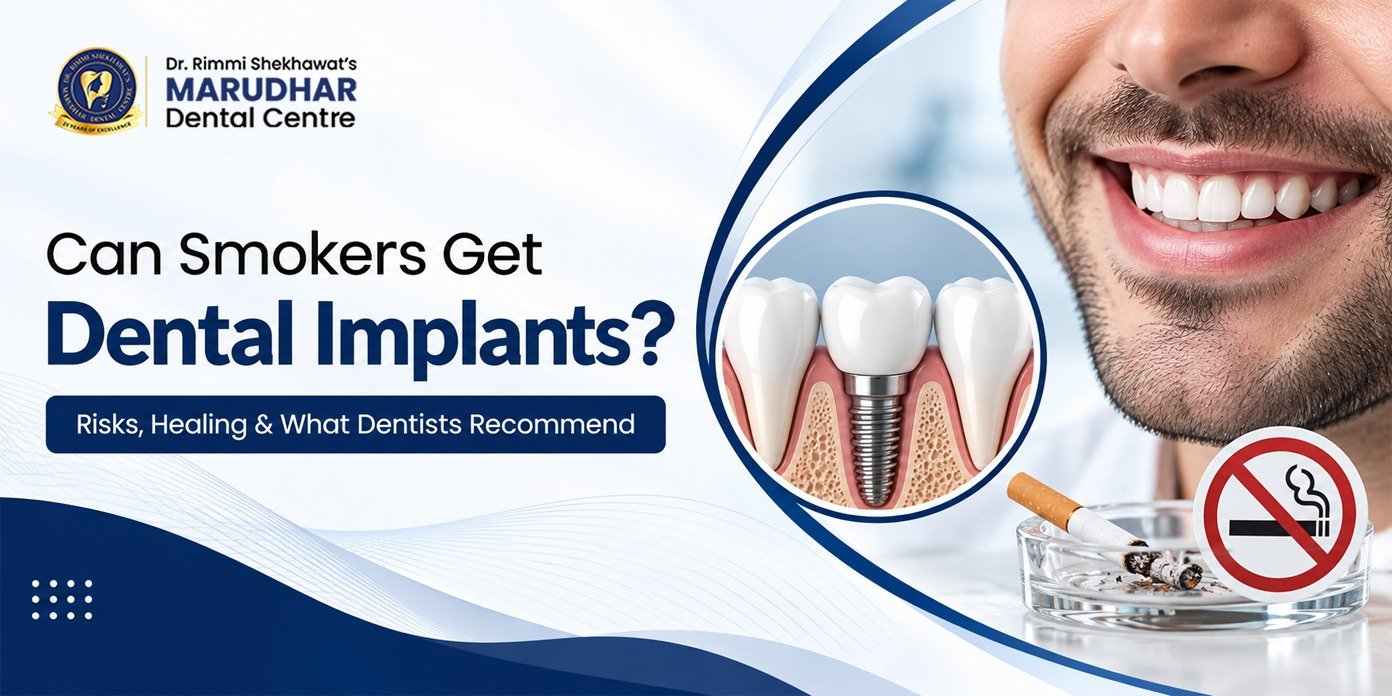
Smokers can get dental implants in many cases, if treatment is planned around their oral health, bone condition and tobacco habits. Tobacco changes blood supply, immune response and tissue repair. Each of these determines how well an implant heals and how long it lasts. Patients searching for the “best dental implant in Jaipur” should expect a thorough assessment before surgery is scheduled.
Smoking does not automatically rule out treatment, yet it raises the chances of certain complications. An individual evaluation by an implant specialist remains the most reliable way to judge suitability.
Can Smokers Get Dental Implants?
Yes, in many cases smokers can undergo implant treatment, although the decision depends on a careful clinical review rather than smoking status alone. Dentists ask about tobacco consumption because it influences healing, gum health and long-term implant stability. A specialist typically weighs these factors.
-
Number of cigarettes smoked per day
-
Duration of the smoking habit
-
Overall oral health and gum condition
-
Bone quality and quantity
-
Existing medical conditions
-
Previous implant history
No single answer applies to every smoker. A person who smokes lightly and has healthy gums and dense bone presents a very different clinical picture from a long-term heavy smoker with active gum disease. Clinics assess each case individually and build a personalised plan around the patient’s scans, habits and medical history.
How Does Smoking Affect Dental Implants?
Smoking affects implants through poor circulation, impaired healing processes, periodontal problems and inhibition of osseointegration. The ways in which each factor contributes to the problem are discussed below-
Reduced Blood Flow
Nicotine constricts blood vessels, and carbon monoxide lowers the oxygen carried in the blood. The area needs enough oxygen and nutrients to heal. Poor blood flow can slow down the healing process.
Slower Healing
Tobacco exposure weakens the immune response and slows the formation of new tissue. The gum must close securely to keep bacteria out after implant placement. Delayed closure exposes the implant to infection during its most vulnerable weeks.
Higher Risk of Gum Problems
Smokers get periodontal disease more often and in more serious conditions. Healthy gums are essential for stability because inflammation and loss of bone occur around an implant.
Impact on Osseointegration
Osseointegration is a process that involves the growth of the jawbone on the titanium surface to make the implant firmly fixed. Such a process needs enough blood circulation and minimal inflammation. Smoking may impact both of these factors. If integration is not adequate, then there will be no bone formation around the implant, and thus it becomes loose under normal chewing forces.
What Are the Risks of Dental Implants for Smokers?
Smokers face a higher chance of healing and stability problems, although the degree of risk varies with smoking intensity and individual oral health. The main risks include the following-
-
Delayed healing of gum and bone
-
Implant failure
-
Infection or inflammation around the implant
-
Gum recession and bone loss
-
Peri-implantitis, an inflammatory condition that destroys supporting tissue
-
Reduced long-term implant stability
-
Complications after bone grafting or sinus lift procedures
Not every smoker will experience these outcomes. A lighter habit, healthy gums and careful aftercare lower the probability considerably. Risk assessment therefore relies on clinical examination and imaging rather than assumptions about smokers as a group.
Is Implant Failure More Common in Smokers?
Research consistently links smoking with a higher rate of implant failure, although tobacco is one contributing factor among several. Implant failure means the implant does not integrate with the bone, or loses its support and must be removed. Early failure occurs in the first months, when the bone fails to attach to the implant.
Late failure develops after the crown is fitted, usually because of peri-implantitis or excessive bite load. Surgical technique, bone quality, gum health, diabetes control and oral hygiene all influence the result. Adherence to post-operative instructions is among the few factors patients control directly.
Should You Stop Smoking Before Dental Implant Surgery?
Yes, dentists generally advise quitting tobacco consumption before implant surgery because it improves circulation, supports immune function and lowers the risk of complications. However, reducing it does not remove the risk because nicotine and carbon monoxide continue to affect the tissue with each cigarette.
Honest disclosure allows the dentist to adjust the surgical plan, timing and follow-up schedule. The table below summarises how smoking status typically influences planning.
|
Smoking status |
Healing environment |
Typical clinical approach |
|
Non-smoker |
Normal circulation and immune response |
Standard treatment protocol |
|
Stopped before surgery |
Circulation improves progressively |
Standard plan with close monitoring |
|
Reduced but continuing |
Risk remains present |
Cautious planning and frequent reviews |
|
Heavy and continuing smoker |
Highest exposure to healing complications |
Treat gum problems before approving the implant procedure |
How Long Should You Stop Smoking Before Dental Implants?
The recommended period varies between patients and clinicians, so no universal number applies. Stopping in the weeks before surgery gives the tissue additional time to recover. The pre-operative period allows circulation and gum condition to improve.
Remaining smoke-free after placement is even more important, since the blood clot, the gum seal and early bone bonding are all fragile during the first weeks. Patients should follow the exact instructions given by their dentist.
Can You Smoke After Getting Dental Implants?
Smoking immediately after implant surgery is strongly discouraged because it disturbs the surgical area and slows healing. Heat, chemical exposure and the suction of inhalation can disrupt the blood clot, irritate the wound and increase infection risk.
Dentists therefore recommend avoiding tobacco throughout the critical healing period. Returning to smoking later continues to affect gum health and bone levels around the implant, which raises the long-term risk of peri-implantitis.
How Long Does It Take for Dental Implants to Heal in Smokers?
Bone integration generally takes three to six months, and smokers may need a longer or more closely monitored period depending on individual factors. Healing follows three stages-
-
Soft tissue closes within the first one to two weeks.
-
Osseointegration follows over the coming months.
-
The final crown or bridge is fitted once stability is confirmed.
Healing time can vary because of reduced circulation, gum inflammation, lower bone density, the amount of tobacco used and any bone grafting required. Grafts or sinus lifts, where needed, can add several months to the schedule.
What If You Cannot Quit Smoking Completely?
Patients who cannot stop completely should still seek assessment, since a dentist can build a personalised plan that manages the added risk. The first step is to state the exact quantity and type of tobacco consumed. Patients can then ask about adjustments such as additional gum treatment, closer reviews and modified timing. Surgical and hygiene instructions must be followed precisely.
Cessation support can be discussed with a physician or qualified cessation professional. Decreasing the intake will reduce the exposure. But it will not eliminate risks during surgery. Honest answers allow the treatment plan to reflect actual risk rather than assumptions.
Do Vapes, E-Cigarettes or Tobacco Alternatives Affect Dental Implants?
Switching from cigarettes does not make implant treatment automatically risk-free because nicotine constricts blood vessels regardless of the delivery method. Research on vaping and dental implants is still limited. Vaping should not be treated as the same as smoking, or as completely safe.
Dentists need complete information about all nicotine and tobacco use, so vaping habits should be discussed openly with the implant dentist.
What Do Dentists Recommend for Smokers Considering Dental Implants?
The professionals at a dental clinic in Jaipur suggest following a well-planned procedure that addresses tobacco use before surgery and monitors healing afterwards.
-
Complete a comprehensive dental and medical evaluation.
-
Treat gum disease before implant placement when necessary.
-
Discuss smoking frequency openly.
-
Consider stopping smoking before treatment.
-
Follow post-operative instructions exactly.
-
Maintain excellent oral hygiene.
-
Attend scheduled follow-up appointments.
-
Report pain, swelling, bleeding or implant mobility promptly.
How Can Smokers Improve Their Chances of Successful Dental Implants?
Smokers improve outcomes most by stopping tobacco, treating gum disease and maintaining consistent hygiene and regular checkups. Controlling conditions such as diabetes supports healing, and aftercare instructions ensure the protection of the implant during the integration period.
Prompt treatment of any gum or implant problem will prevent inflammation from leading to bone loss.
Final Takeaway
Smokers can get dental implants. But tobacco consumption is an important modifiable risk factor that dentists consider. Outcomes are based on oral hygiene, bone conditions, smoking, surgical techniques and post-surgical care. Quitting smoking contributes to healing and reduces risks.
An individual assessment at a trusted dental clinic in Jaipur like Marudhar Dental Centre gives a far more reliable answer. Proper dental implant care after the procedure will help ensure its proper functioning over the years.
FAQs
Can a heavy smoker get dental implants?
It is possible, but smoking can make implant treatment harder. The dentist will check your gums, jawbone and general oral health first. Reducing or quitting before treatment can help the mouth heal better.
Can I get dental implants if I smoke every day?
Smoking every day does not automatically mean you cannot have implants. Your dentist will look at the condition of your gums and bone before making a decision.
How long should I stop smoking before dental implants?
The recommended time can differ from person to person. Some dentists may ask you to stop several weeks before surgery. It is best to follow the period advised for your treatment rather than choose a timeframe yourself.
How long after dental implants can I smoke?
Try to stay away from cigarettes during the healing period. The tissues around the implant need time to recover, and smoking can interfere with that process. Your dentist can tell you when it is safe to resume.
Does smoking cause dental implants to fail?
It can raise the chance of implant problems, but smoking does not mean an implant will definitely fail. Gum health, bone support, oral hygiene and the healing process all matter.
Can smokers get All-on-4 dental implants?
Some smokers can have All-on-4 treatment. The dentist will first check whether the gums and available bone can support the procedure. Smoking habits are also considered before treatment begins.
Is vaping safe after dental implant surgery?
Vaping is recommended to be avoided after implant surgery. Nicotine can reduce blood flow to the tissues, which is not helpful during recovery. Speak to your dentist about how long you should avoid it.
Can I get a dental implant if I have gum disease and smoke?
Not usually until the gum disease has been treated. Healthy gums provide a better foundation for an implant. Once the condition is under control, the dentist can assess your mouth again.
How can I reduce the risk of implant failure as a smoker?
Quitting smoking is the most useful step. Keep your teeth and gums clean, treat gum problems promptly and follow the instructions given after surgery. Regular dental reviews also help the dentist spot problems early.

Dr. Rimmi Shekhawat
Dr. Rimmi Shekhawat is one of Jaipur's most respected dental surgeons, with over 25 years of clinical experience and a reputation as a pioneer of laser dentistry and implantology in Rajasthan.
View Full Profile