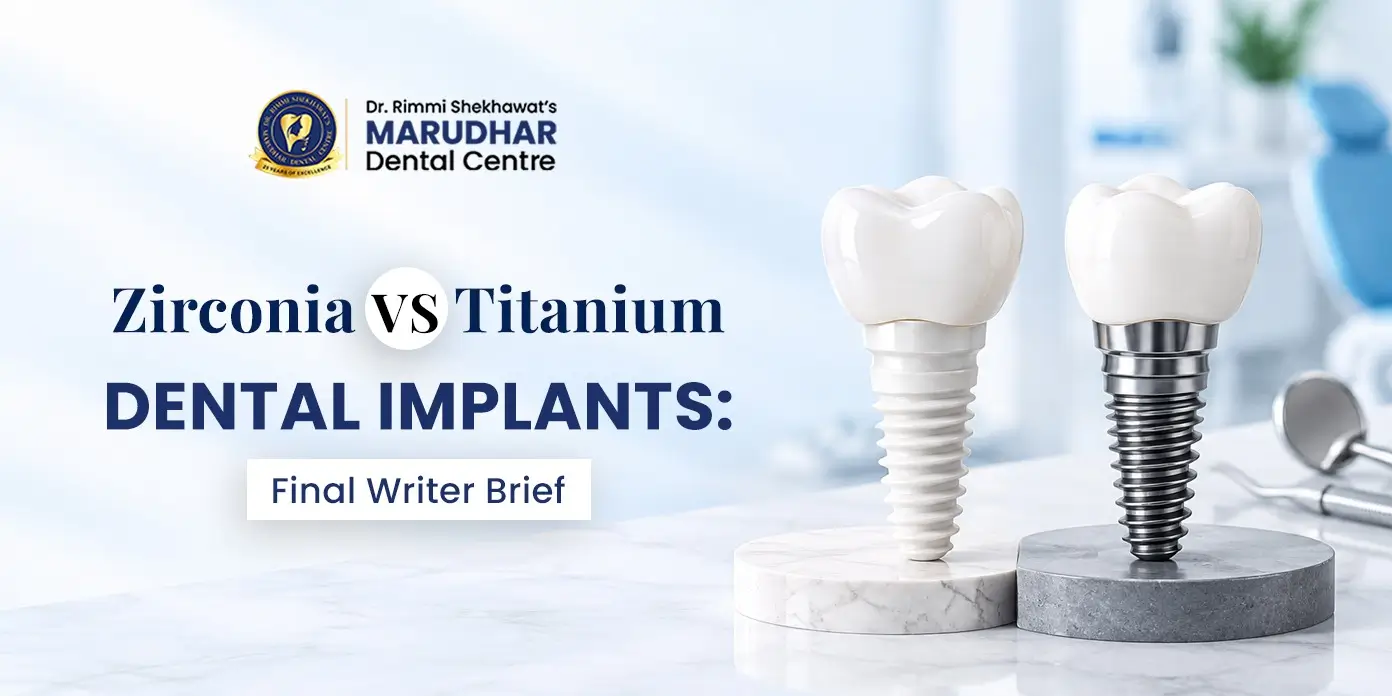
Zirconia or titanium dental implants - which one is actually better for you? There's no single right answer. Zirconia gives you a tooth-coloured, metal-free option, while titanium has decades of data behind it and more design flexibility. What decides it is your bone, your gums, and what your dentist recommends as the better choice.
Both materials perform the same basic function. They replace a missing tooth root so a crown, bridge, or denture has something solid to be placed on. Zirconia is a ceramic, while titanium is a metal: that one fact drives almost every difference between them, from how they look to how they're placed to how a dentist plans around them. This guide walks through those differences, so your next conversation with a dentist is more effective.
What Is the Difference Between Zirconia and Titanium Dental Implants?
Ceramic versus metal is the core split, and nearly everything else traces back to it. Titanium has been used in implant dentistry for a long time. Most titanium implants come in two pieces (a screw-shaped root section and a separate abutment on top), which gives a dentist room to adjust angle and position during planning.
-
Zirconia is a newer arrival in mainstream practice, and it's usually made as one solid piece. That changes the planning process, since there's far less margin for adjustment once it's placed.
-
Research comparing zirconia and titanium dental implants examines their clinical performance and outcomes. Read this research on zirconia and titanium dental implants for further clinical evidence.
-
Colour is the other obvious split. Titanium has a grey cast that can show through thin gum tissue, especially near the front of the mouth.
-
Zirconia is white, closer to natural enamel, which is why patients sometimes bring it up when discussing visible teeth. The decision still runs through a clinical exam.
Which Is Better, Zirconia vs Titanium Dental Implants?
Better depends on the person, not the material. Bone quality, bite force, implant design, and the specific clinical picture all factor in before a dentist can answer that for you.
|
Factor |
Zirconia Implants |
Titanium Implants |
|
Material and composition |
Ceramic (zirconium dioxide) |
Metal alloy |
|
Appearance |
White, blends with natural tooth shade |
Grey, may be visible through thin gum |
|
Strength and mechanical properties |
Strong, but more brittle under heavy loads |
High tensile strength, some flexibility under pressure |
|
Clinical evidence and track record |
Growing research base, newer to mainstream use |
Decades of documented long-term outcomes |
|
Implant design options |
Mostly single-piece designs |
Single-piece and two-piece designs |
|
Potential limitations |
Fracture risk under certain loads, less design flexibility |
Visible grey shade possible in some cases |
|
Suitability |
Depends on bone volume, gum thickness, bite pattern |
Depends on bone density, medical history, bite pattern |
Treat this table as a reference, not a tally. A dentist weighs these points against your actual mouth, not against each other in the abstract.
What Are Zirconia Dental Implants?
Zirconia implants are built from zirconium dioxide, a ceramic known for its white, tooth-like colour. That shade is often the first thing patients ask about, particularly for implants near the front of the smile.
-
Most zirconia implants are single-piece, meaning the root and abutment are fused together before placement. That limits how much a dentist can adjust after the fact, so planning has to be precise from the start.
-
Patients who want to avoid metal often ask about zirconia for that reason. Whether it actually fits a given case still comes down to bone volume and the forces the implant will need to withstand.
What Are Titanium Dental Implants?
Titanium has the longest clinical history of any dental implant material. It's strong, relatively light, and backed by research that spans several decades across different patient populations.
Because titanium implants come in both one-piece and two-piece formats, dentists have more room to work with in complicated cases - multiple missing teeth, limited bone, or unusual bite patterns. That flexibility is one reason titanium remains so widely used.
What Are the Benefits of Zirconia Dental Implants?
Two things tend to draw patients toward zirconia: the tooth-coloured appearance and the absence of metal.
The colour advantage matters most where gum tissue is thin, since a grey implant can sometimes show through in those spots. Patients who'd rather avoid metal for personal reasons, allergy concerns, or general preference also gravitate toward it. These are genuine benefits, but they don't automatically translate into a better outcome for every patient. Aesthetics carry more weight in visible areas of the mouth, and even there, the implant still needs enough bone support and precise placement to succeed.
Are Zirconia Dental Implants Suitable for Patients Concerned About Metal?
Wanting a metal-free implant is a reasonable preference, and zirconia answers that directly. But preference alone doesn't make it the right fit.
A dentist still has to confirm the bone structure can support a one-piece ceramic implant and that the bite forces involved won't put it at risk. Preference is one factor in the conversation, not the deciding one.
What Are the Benefits of Titanium Dental Implants?
Titanium's long history is its biggest asset. Decades of use across different implant systems have given dentists a deep well of outcome data to draw from.
It also bonds reliably with bone through osseointegration, a process that's been studied extensively since titanium implants first entered practice. Add to that the range of available systems and sizes, and titanium often ends up the more flexible option for complex bone situations.
Why Is Titanium Commonly Used in Implant Dentistry?
Its history with osseointegration is the main reason titanium stays a default choice in so many practices. The material has simply been tested longer and in more situations than most alternatives.
That history doesn't replace good planning, though. Bone quality, implant position, and aftercare still determine whether a titanium implant actually succeeds.
What Are the Disadvantages of Zirconia and Titanium Dental Implants?
Every material has trade-offs. Knowing them ahead of time keeps expectations realistic.
Zirconia implant considerations:
-
Mostly restricted to single-piece designs, which limits planning flexibility
-
Can be more susceptible to fracture under heavy biting loads
-
Shorter long-term track record compared with titanium
Titanium implant considerations:
-
Grey colour may show through thin gum tissue in certain cases
-
Two-piece designs carry a small chance of screw loosening over years of use
None of these risks is automatic. They depend on the implant system chosen, how it's placed, and the patient's own oral health. Titanium doesn't commonly trigger allergic reactions, and zirconia isn't free of risk simply because it's ceramic. Both require careful case selection from the start.
How Long Do Zirconia and Titanium Dental Implants Last?
Longevity comes down to bone and gum health, hygiene habits, smoking, bite force, implant design, and follow-up care - not the material by itself.
Patients who keep up with oral hygiene and regular dental visits tend to see better long-term results, regardless of which material they choose. Smoking and untreated gum disease can shorten the life of either type of implant. There's no fixed number of years a dentist can promise upfront for zirconia or titanium. A more accurate estimate comes only after reviewing your bone density, bite pattern, and general oral health.
How Do Dentists Decide Which Dental Implant Material Is Right for You?
Bone quality, gum health, bite force, aesthetic priorities, and medical history all go into that decision before a dentist recommends zirconia or titanium.
Bone volume often carries the most weight, since certain implant designs need more structural support than others. Gum thickness affects how visible an implant might eventually be. Bite force matters too, particularly for molars, which absorb far more pressure than front teeth during normal chewing.
What Should You Discuss During Your Dental Implant Consultation?
A proper consultation covers bone and gum assessment, your medical and dental history, bite forces, what you want aesthetically, the treatment options available, the specific implant system under consideration, and what long-term maintenance will look like.
This is also the right moment to mention any preferences, such as wanting to avoid metal, so your dentist can check whether that preference is clinically workable. If you want to see what implant treatment typically involves in more detail, the best dental implant in Jaipur offers a better idea of the broader process.
In the end, the decision should come from an individual clinical assessment, not a general assumption about which material wins.
Why Choose Marudhar Dental Clinic?
At Marudhar Dental Clinic, no implant recommendation comes before a full individual assessment. Bone structure, gum health, and bite pattern are reviewed first, because two patients rarely need the exact same approach.
The clinic's dentists work from that assessment rather than defaulting to one material across the board. If you're trying to decide between zirconia and titanium, or you're simply not sure which direction makes sense, a consultation is the clearest way to get an answer grounded in your own mouth rather than general assumptions.
Book a consultation with Marudhar Dental Clinic to talk through which implant option suits your situation.
FAQs
1. What is the main difference between zirconia and titanium dental implants?
Zirconia is a white ceramic. Titanium is a metal. That difference shapes appearance, implant design, and placement method, though both are built to anchor a replacement tooth securely.
2. Are zirconia dental implants better than titanium implants?
Not universally. Zirconia vs titanium dental implants comes down to bone quality, aesthetic priorities, and clinical fit, all of which a dentist evaluates case by case.
3. Are titanium dental implants safe?
Titanium implants have been placed in patients for a long time. Sensitivity reactions do occur, but they’re genuinely uncommon. Like any implant, the outcome depends heavily on surgical technique, bone quality, and how the patient manages aftercare.
4. Are zirconia dental implants suitable for everyone?
The single-piece design that most zirconia implants use leaves little room for adjustment once placed. Patients with limited bone volume or certain jaw angles may not be good candidates. Only a proper clinical exam can settle that.
5. Which dental implant material looks more natural?
In most visible cases, zirconia. The white ceramic shade sits closer to actual tooth colour, and it won’t cast a grey tint through thin gum tissue. Titanium can still look perfectly fine, especially when there’s enough gum coverage; it just takes more from the surrounding tissue to hide the colour.
6. Do zirconia dental implants last as long as titanium implants?
Possibly, but that question is still being answered. Titanium has 50-plus years of follow-up data. Zirconia simply hasn’t been around long enough to match that. Early results are reasonable, but long-term durability in high-load situations needs more time and more studies.
7. Can people with metal sensitivities consider zirconia dental implants?
Worth raising with your dentist, yes. Zirconia has no metal in it, so patients who react to metal alloys have a legitimate reason to ask about it. That said, bone volume and bite mechanics still have to support the implant design before any recommendation is made.
8. What are the disadvantages of zirconia dental implants?
The single-piece build limits how much a dentist can fine-tune positioning after placement. Under heavy chewing forces, ceramic carries a higher fracture risk than metal. And because widespread use is relatively recent, there’s simply less long-term outcome data compared to titanium.
9. How do dentists choose the right dental implant material?
There’s no checklist that produces an automatic answer. A dentist looks at how much bone is available, how thick the gum tissue is, where the missing tooth sits in the mouth, what kind of biting force that area handles, any relevant medical history, and what the patient actually wants aesthetically. The combination of those factors points toward one material over the other, or raises further questions before a decision is made.
10. Are zirconia or titanium dental implants more suitable for front teeth?
Zirconia comes up more often for front teeth, mostly because of colour. A white ceramic implant near the front of the mouth is less likely to affect how the gumline looks over time. Titanium works too, particularly when gum tissue is thick enough to mask the shade, but in thinner tissue cases, it needs more careful thought.
Conclusion
Zirconia vs titanium dental implants doesn't come down to a single answer. Zirconia offers a ceramic, metal-free option with a natural shade that some patients prefer. Titanium offers a longer history and more design options for complicated cases.
Which one fits you depends on bone condition, gum health, bite force, and what shows up during a clinical exam - not a forced preference for one material. If you're weighing implant options, the most useful next step is a consultation where your case gets looked at directly.
Contact Marudhar Dental Clinic to book a consultation and find out which implant option fits your needs.

Dr. Rimmi Shekhawat
Dr. Rimmi Shekhawat is one of Jaipur's most respected dental surgeons, with over 25 years of clinical experience and a reputation as a pioneer of laser dentistry and implantology in Rajasthan.
View Full Profile