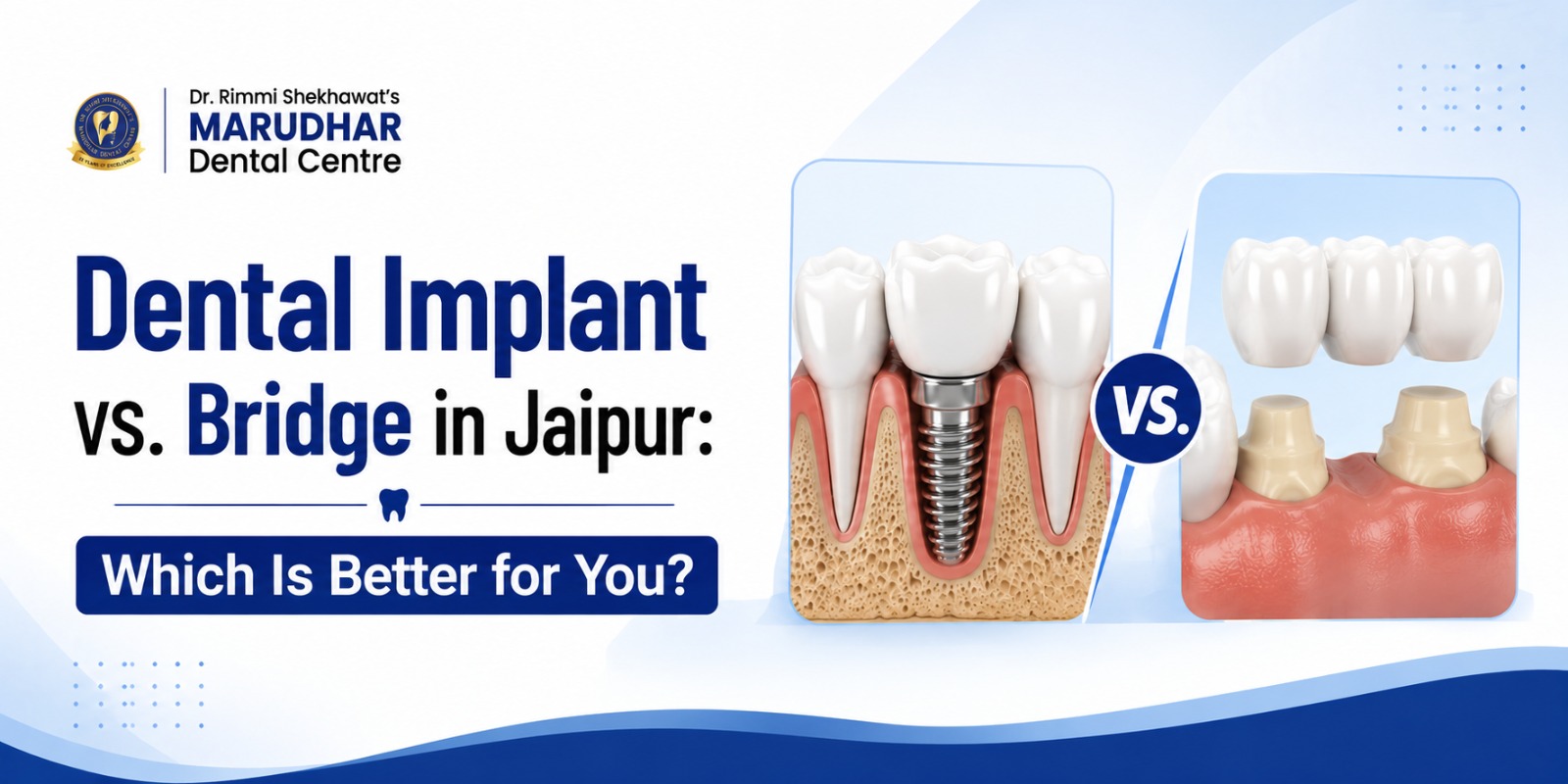
Missing one or more teeth can affect far more than your smile. It can make eating difficult, change the way you speak, and gradually impact your confidence. One of the most common questions patients ask is whether they should choose a dental implant or a bridge.
When comparing dental implant vs bridge Jaipur, dental implants are usually the better long-term solution because they replace the missing tooth without affecting adjacent teeth, preserve jawbone health, and can last for decades with proper care. However, bridges remain a suitable option for some patients depending on their oral health, budget, and treatment goals.
If you're exploring tooth replacement options, understanding the advantages, limitations, and long-term outcomes of each treatment can help you make an informed decision.
Why Patients Hesitate Before Getting Dental Implants
Although dental implants have become the gold standard for replacing missing teeth, many patients delay treatment because of concerns about cost, surgery, recovery time, and long-term success. Most of these concerns can be addressed with accurate information and a consultation with an experienced implant dentist.
Fear of Cost
Cost is often the first concern patients mention.
While implants usually require a higher initial investment than bridges, they frequently prove more economical over time because they last significantly longer and rarely need replacement when maintained properly.
Before comparing treatment options, it's helpful to understand what influences the overall dental implant cost in Jaipur, including the implant brand, bone grafting (if needed), diagnostic scans, and final crown.
Instead of focusing only on the upfront expense, consider the long-term value of preserving both your smile and your jawbone.
Fear of Surgery and Pain
Many people imagine implant surgery to be painful, but modern implant procedures are much more comfortable than most patients expect.
The procedure is performed under local anesthesia, and most patients describe the discomfort afterwards as similar to having a tooth extracted. Mild swelling or soreness usually settles within a few days and can be managed with prescribed medication.
Digital planning and minimally invasive techniques have also made implant placement safer and more predictable.
Uncertainty About Long-Term Results
Patients naturally want reassurance that their investment will last.
Clinical research consistently shows that dental implants have an excellent long-term success rate when placed correctly and maintained with good oral hygiene.
Unlike bridges or removable dentures, implants integrate directly with the jawbone, creating a stable foundation that feels and functions much like a natural tooth.
Myths vs. Reality — Common Misconceptions
Several myths still discourage patients from considering implants.
Some believe implants frequently fail, while others assume they are suitable only for younger people. In reality, age is rarely the deciding factor. Overall health, bone quality, and oral hygiene have a much greater influence on success.
Many older adults successfully receive implants and enjoy improved comfort and quality of life.
The Real Benefits of Dental Implants — What the Data Says
Dental implants offer advantages that extend beyond replacing a missing tooth. They improve oral function, help maintain facial structure, and provide one of the most predictable long-term solutions available in modern dentistry.
Lifespan: How Long Do Implants Actually Last?
One of the biggest advantages of implants is durability.
With proper oral hygiene and regular dental check-ups, many implants continue functioning successfully for 20 years or longer. In comparison, bridges and removable dentures usually require replacement much sooner because of wear or changes in surrounding teeth and bone.
Success Rate: Global & Indian Clinical Data
Modern implant systems have demonstrated excellent clinical outcomes worldwide.
Studies consistently report success rates between 95% and 98%, particularly when treatment is carefully planned using CBCT imaging and high-quality implant systems.
Proper case selection, experienced surgical planning, and good patient compliance are key factors behind these excellent results.
Bone Preservation — The Benefit No One Talks About
After a tooth is lost, the jawbone gradually begins to shrink because it no longer receives stimulation from chewing.
Dental implants are the only replacement option that helps preserve bone by transmitting chewing forces naturally into the jaw.
Bridges and dentures restore appearance but cannot prevent this gradual bone loss.
This makes implants particularly valuable for maintaining long-term facial structure and oral health.
Quality of Life Impact (Eating, Speaking & Confidence)
Dental implants closely mimic natural teeth.
Patients commonly report improvements in:
- Comfortable chewing
- Clear speech
- Smile confidence
- Social interactions
- Overall quality of life
Unlike removable dentures, implants remain fixed in place, allowing patients to eat many foods without worrying about movement or discomfort.
Dental Implants vs Other Options — Long-Term Value Comparison
| Factor | Dental Implant | Fixed Bridge | Removable Denture |
|---|---|---|---|
| Average Lifespan | 20–25+ years | 10–15 years | 5–8 years |
| Bone Preservation | Yes | No | No |
| Feels Natural | Yes | Partial | No |
| Maintenance | Brush & floss | Special flossing | Daily removal |
| Long-Term Cost | Lower | Medium | Higher (multiple replacements) |
| Success Rate | 95–98% | 85–90% | N/A |
Honest Downsides — When Implants May Not Be the Right Choice
Dental implants offer many advantages, but they are not the ideal solution for every patient. Understanding both the benefits and limitations helps you make an informed treatment decision.
Higher Upfront Cost Compared to Alternatives
Implants generally cost more initially than bridges or dentures because they involve surgery, high-quality implant materials, digital planning, and customised restorations.
However, because implants often last significantly longer, many patients find they offer better value over the long term.
Requires Surgery and Healing Time (3–6 Months)
Unlike bridges, implants require surgical placement followed by a healing period during which the implant fuses with the jawbone.
This biological process, called osseointegration, usually takes between three and six months, depending on bone quality and overall health.
Although this extends treatment time, it contributes to the implant's long-term stability.
Not Suitable for Everyone — Medical Conditions That Matter
Certain medical conditions require additional planning before implant treatment.
Examples include:
- Uncontrolled diabetes
- Heavy smoking
- Active gum disease
- Severe osteoporosis
- Certain immune disorders
Most patients can still receive implants after appropriate medical management and dental evaluation.
What Happens If an Implant Fails?
Although uncommon, implant failure can occur because of infection, insufficient bone integration, smoking, or excessive biting forces.
Early diagnosis often allows the implant to be removed, the area to heal, and a replacement implant to be placed successfully.
Understanding dental implant failure reasons helps patients reduce risk by maintaining excellent oral hygiene and attending regular follow-up appointments.
Dental Implant Risk Factors & How They Are Managed
| Risk Factor | Likelihood | How Marudhar Minimises It |
|---|---|---|
| Implant rejection | <2% | 3D imaging + premium implant selection |
| Infection | <5% | ISO-certified sterilisation protocols |
| Bone loss | Moderate | Bone grafting when indicated |
| Nerve damage | Rare | CBCT-guided digital planning |
| Implant failure | <5% globally | Internationally recognised implant systems |
Dental Implant vs. Bridge vs. Denture — Which Is Right for You?
Choosing the right tooth replacement option depends on several factors, including your oral health, budget, lifestyle, and long-term expectations. While every case is different, understanding when each treatment works best can help you make a confident decision when comparing dental implant vs bridge Jaipur.
When a Bridge Is a Better Fit
A dental bridge may be the right option if:
- You have one missing tooth with healthy teeth on either side.
- You prefer a quicker treatment without surgery.
- Your jawbone cannot currently support an implant and you do not wish to undergo bone grafting.
- Budget is your primary concern.
However, bridges require trimming the adjacent healthy teeth to support the restoration. Over time, these supporting teeth may become more susceptible to decay or fracture.
When Dentures Make Sense
Dentures remain a practical solution for patients who:
- Have multiple missing teeth.
- Need a removable replacement option.
- Are not suitable candidates for surgery.
- Require an affordable tooth replacement.
Although modern dentures are lighter and more comfortable than older designs, they may loosen over time as the jawbone naturally shrinks.
When Only an Implant Will Do
Dental implants are often the preferred choice when:
- You want the most natural-looking and functioning replacement.
- Adjacent teeth are healthy and should not be altered.
- Long-term durability is important.
- You want to preserve jawbone health.
- You expect maximum comfort while eating and speaking.
If you're considering dental implants: pros and cons, implants offer unmatched stability and longevity for eligible patients.
Can You Switch from Bridge or Denture to an Implant Later?
Yes. Many patients initially choose a bridge or denture and later decide to replace it with an implant.
However, delaying implant placement for several years may result in:
- Jawbone shrinkage
- Gum recession
- More complex surgery
- Possible need for bone grafting
Discussing future treatment goals with your dentist early can help preserve your options.
How to Know If You Are a Good Candidate for Dental Implants in Jaipur
Most healthy adults are suitable candidates for implants, but a detailed evaluation is essential before treatment begins. Modern diagnostics help determine whether implant placement can be performed safely and predictably.
Jawbone Health & Density Requirements
Dental implants require sufficient jawbone to provide long-term stability.
Your assessment may include:
- Digital CBCT scan
- Bone density evaluation
- Assessment of gum health
- Bone grafting recommendation (if required)
Patients with mild to moderate bone loss can often still receive implants after bone augmentation.
Age Considerations (Minimum Age for Implants)
Dental implants are generally recommended after jaw growth is complete, usually around 18–20 years of age.
There is no upper age limit. Many patients in their 60s, 70s, and even 80s successfully receive implants when their overall health is good.
Systemic Health Factors (Diabetes, Blood Pressure & Osteoporosis)
Conditions that require additional planning include:
- Controlled diabetes
- High blood pressure
- Osteoporosis
- Heart disease
- Autoimmune disorders
Most of these conditions do not prevent implant treatment when managed appropriately.
Lifestyle Factors — Smoking, Alcohol & Oral Hygiene Habits
Lifestyle has a major influence on implant success.
Patients are advised to:
- Stop smoking before and after surgery.
- Limit alcohol during healing.
- Brush and floss daily.
- Attend regular dental reviews.
Following these recommendations significantly reduces the risk of dental implant problems and solutions Jaipur becomes a concern later.
Still Unsure If You're a Candidate?
The best way to know whether implants are right for you is through a comprehensive consultation with digital imaging.
A single appointment can determine your suitability, explain available options, and answer all your questions—without any pressure to proceed.
Book a free consultation and receive a personalized treatment plan from an experienced implant team.
Why the Dentist You Choose Matters as Much as the Decision Itself
Even the highest-quality implant can fail if diagnosis, planning, or placement is inaccurate. Choosing an experienced implant dentist who uses modern technology and internationally recognized implant systems greatly improves treatment success and long-term satisfaction.
Technology Used — 3D CBCT vs. Traditional X-Ray Planning
Modern implant dentistry relies on Cone Beam CT (CBCT) rather than traditional two-dimensional X-rays.
Benefits include:
- Precise implant positioning
- Better evaluation of bone quality
- Reduced surgical risk
- Improved treatment planning
- Improved treatment planning
Implant Brand Matters — Nobel BioCare vs. Generic
Not all implants are manufactured to the same standards.
International implant brands offer:
- Extensive clinical research
- Better long-term success records
- Readily available replacement components
- Consistent manufacturing quality
- Proven reliability
If you're searching for the best implant dentist in Jaipur, ask about the implant systems being used—not just the procedure itself.
Post-Placement Care & Follow-Up Protocol
Long-term implant success depends on regular follow-up care.
A comprehensive maintenance program includes:
- Professional cleaning
- Bite evaluation
- Digital X-ray reviews
- Gum health assessment
- Oral hygiene guidance
Patients who attend routine maintenance visits generally experience fewer implant complications.
The Bottom Line — Are Dental Implants Worth It in Jaipur?
For most patients, the answer is yes.
Although implants involve a higher initial investment than bridges or dentures, they provide superior function, preserve jawbone health, and can last for decades with proper care. They also avoid damaging neighboring healthy teeth, making them one of the most conservative long-term treatment options available.
At Marudhar Dental Clinic, implant treatment combines advanced CBCT-guided planning, internationally recognized implant brands, and evidence-based protocols to deliver predictable and long-lasting results.
Whether you need to replace a single tooth or multiple missing teeth, consulting an experienced implant dentist helps ensure the treatment plan is tailored to your needs.
Conclusion
When comparing dental implant vs bridge Jaipur, there is no one-size-fits-all answer. Bridges and dentures remain suitable for certain patients, but dental implants offer the closest replacement to natural teeth in terms of function, comfort, aesthetics, and long-term oral health.
Ready to Restore Your Smile?
Whether you're replacing one missing tooth or planning a full-mouth rehabilitation, expert guidance can make all the difference.
Learn more about dental implants in Jaipur, explore modern laser dentistry Jaipur options, or book a free consultation with the implant specialists at Marudhar Dental Clinic to discuss your personalized treatment plan.
Frequently Asked Questions

Dr. Rimmi Shekhawat
Dr. Rimmi Shekhawat is one of Jaipur's most respected dental surgeons, with over 25 years of clinical experience and a reputation as a pioneer of laser dentistry and implantology in Rajasthan.
View Full Profile